CellSight MVP-vNext · Concept Release

A clearer view of AI-powered blood-cell image analysis.

Explore CellSight’s product foundation, proposed MVP-vNext capabilities, and technology roadmap across image workflows, batch analytics, evidence-linked AI assistance, and modern deep-learning development.

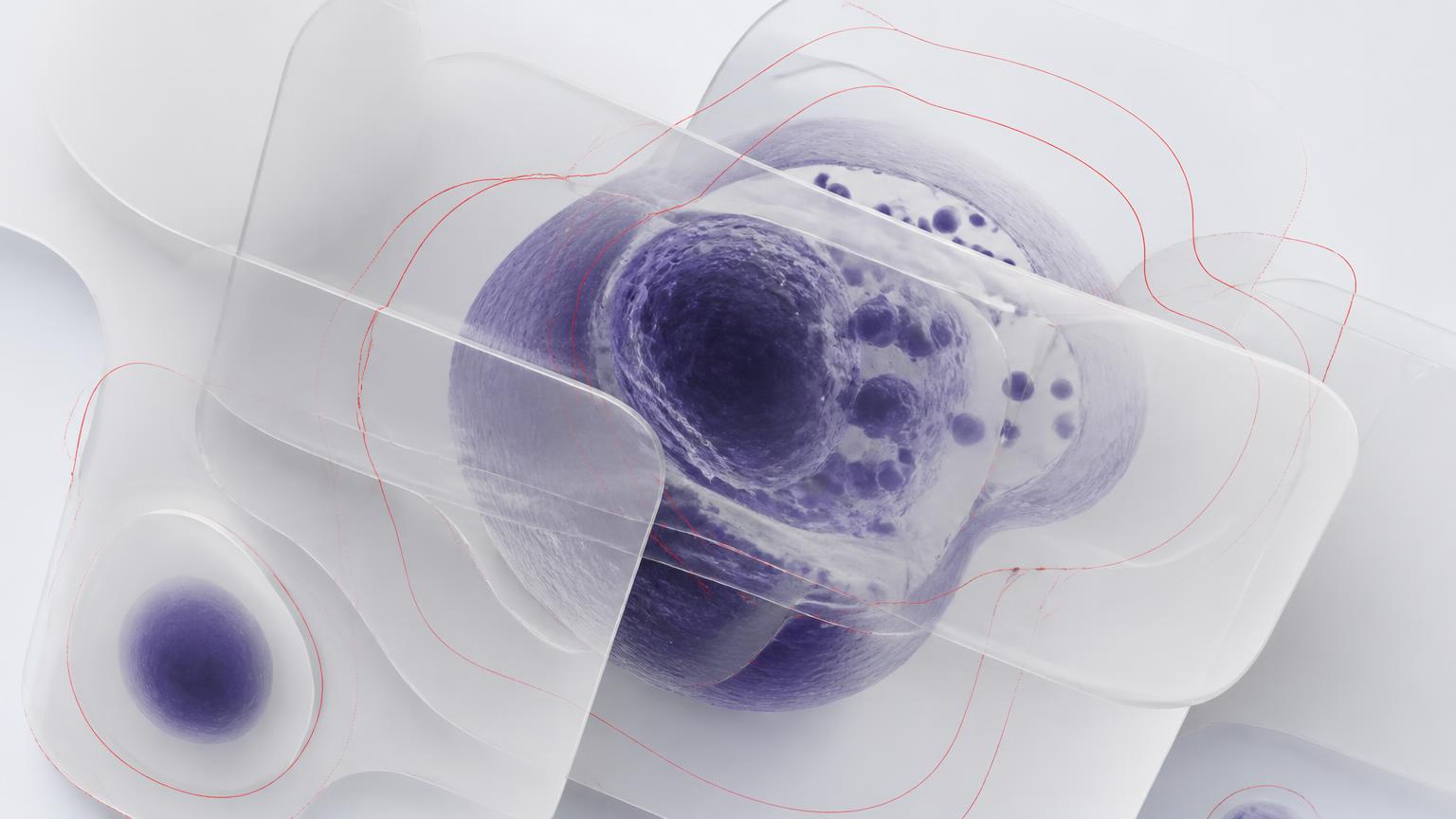
Abstract microscopic field of translucent red blood-cell forms with a few violet nucleated cells, overlaid with fine violet and red analysis contours.
Original CellSight visual. Generated illustration of a microscopic field; not patient material, not CellSight data, and not a result.

Product progression

From a documented foundation to a concept, and the work that must follow.

The three stages below are kept separate on purpose: what earlier materials document, what this release presents as a concept, and what would have to be completed before anything changes.

  1. 1

    Previous MVP Foundation

    What earlier CellSight materials document.

    • Previous materials document a browser-based single-image workflow.
    • Previous materials document a binary Normal-versus-ALL-style output.
    • Previous materials document a raw-score and batch/CSV interaction.
    • Current model identity, reproducibility, data lineage, and validated performance remain under verification.
  2. 2

    MVP-vNext Concept

    The product direction presented in this concept release.

    • Capability-status and disclosure layer
    • Controlled image-workflow shell
    • Baseline adapter if later reproducible, with fixture fallback
    • Batch-transparency dashboard
    • Evidence Centre
    • Bounded Evidence Assistant concept
    • Simulated uncertainty and review experience
    • AI technology roadmap
    • Guided product walkthrough and release evidence
  3. 3

    Validation and Development Roadmap

    The work sequence required before any capability claim can change.

    • Repository and model reconstruction
    • Subject-disjoint evaluation
    • Model and dataset cards
    • Calibration and selective-prediction experiments
    • Technical input-quality checks
    • EfficientNet benchmark
    • Learned OOD evaluation
    • DinoBloom feature benchmark
    • Caveated explainability experiment

Proposed capabilities

Every proposed capability is published with its state, not just its promise.

Each card carries a capability state, an execution mode, an evidence state and the limitation or dependency attached to it.

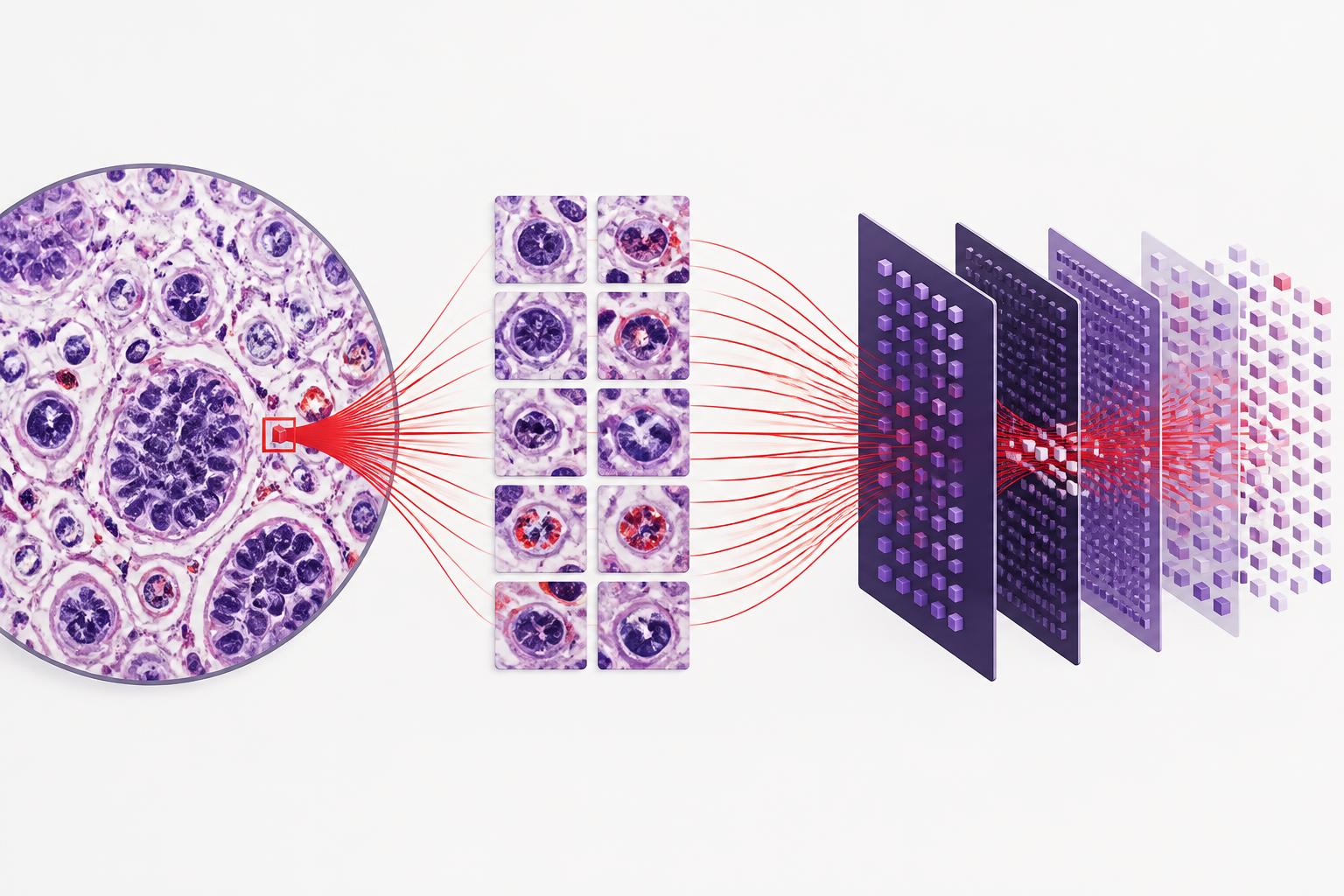
Abstract sequence illustration: a circular microscopy field, a column of isolated cell tiles, and layered neural feature planes linked by red threads.
Proposed analysis workflow, illustrated. No model runs in this concept release.
Capability state: Target FunctionalityExecution mode: Curated Demo Output

Capability-status and disclosure layer

Every surface carries a visible capability state, execution mode and evidence state so reviewers can read the product honestly.

Evidence state
Evidence state: interface design only; no measurement is attached.
Limitation or dependency
Depends on a maintained internal register of capability states and owners.
Capability state: Target FunctionalityExecution mode: Curated Demo Output

Controlled image-workflow shell

A bounded single-image review shell with an abstract illustration in place of any upload, transmission or patient material.

Evidence state
Evidence state: no model executes; raw model score unavailable until model reproduction.
Limitation or dependency
Depends on a reproducible model build and a documented input-quality specification.
Capability state: Under VerificationExecution mode: Future Roadmap

Baseline adapter with fixture fallback

An adapter interface that could later address a reproducible baseline, falling back to local fixtures whenever no baseline is available.

Evidence state
Evidence state: deployed-model identity is not established.
Limitation or dependency
Blocked until the previous build and its weights can be reconstructed and inspected.
Capability state: Simulated ConceptExecution mode: Curated Demo Output

Batch-transparency dashboard

A batch view that foregrounds totals, completion and failure counts, scenario version and execution mode rather than a headline figure.

Evidence state
Evidence state: all figures are illustrative demo data, not CellSight performance data.
Limitation or dependency
Depends on a defined batch schema and an agreed failure taxonomy.
Capability state: Target FunctionalityExecution mode: Curated Demo Output

Evidence Centre

A register of what can be said today, what is missing, who owns the item and when it is reviewed.

Evidence state
Evidence state: owner and review-date fields are placeholders in this build.
Limitation or dependency
Depends on named owners and a review cadence being assigned.
Capability state: Simulated ConceptExecution mode: Scripted Example

Bounded Evidence Assistant concept

An assistant concept restricted to approved internal statements, with an explicit refusal path for clinical questions.

Evidence state
Evidence state: no language model, retrieval index or external search is connected.
Limitation or dependency
Depends on an approved source corpus and a written answer-boundary policy.
Capability state: Simulated ConceptExecution mode: Curated Demo Output

Simulated uncertainty and review experience

Precomputed states that show how an uncertainty and human-review experience could be presented.

Evidence state
Evidence state: the calibration method and decision threshold are not implemented or validated.
Limitation or dependency
Depends on calibration and selective-prediction experiments that have not been run.
Capability state: Research CandidateExecution mode: Future Roadmap

AI technology roadmap

A sequenced view of the research and evaluation work that would need to precede any capability claim.

Evidence state
Evidence state: no experiment in this roadmap has been executed by CellSight.
Limitation or dependency
Depends on data access, compute and an agreed evaluation protocol.

Legend

Capability-status legend

Colour is never the only signal: every status is paired with an icon and a label.

Capability states

Capability state: Target Functionality
A capability the MVP-vNext concept is designed around. Not executing a model today.
Capability state: Simulated Concept
An interaction shown with precomputed illustrative states so the experience can be reviewed.
Capability state: Research Candidate
A technique under consideration. Not implemented or validated by CellSight.
Capability state: Under Verification
A claim or artefact that cannot be stated until the underlying evidence is reproduced.

Execution modes

Execution mode: Scripted Example
Fixed local text written for review. No generation, retrieval or search.
Execution mode: Curated Demo Output
A prepared local illustration of an interface state.
Execution mode: Future Roadmap
Described only; nothing runs in this build.
Execution mode: Not Included
Deliberately absent from this concept release.

MVP-vNext concept

A controlled image-workflow shell.

A bounded review surface built around an abstract illustration. Nothing is uploaded, transmitted or stored, and no score is produced.

Capability state: Target FunctionalityExecution mode: Curated Demo Output

Raw model score unavailable until model reproduction.

Open the concept shell
Abstract sequence illustration: a circular microscopy field, a column of isolated cell tiles, and layered neural feature planes linked by red threads.
Continuity with the capability section above: the same proposed workflow, shown at the point of review.
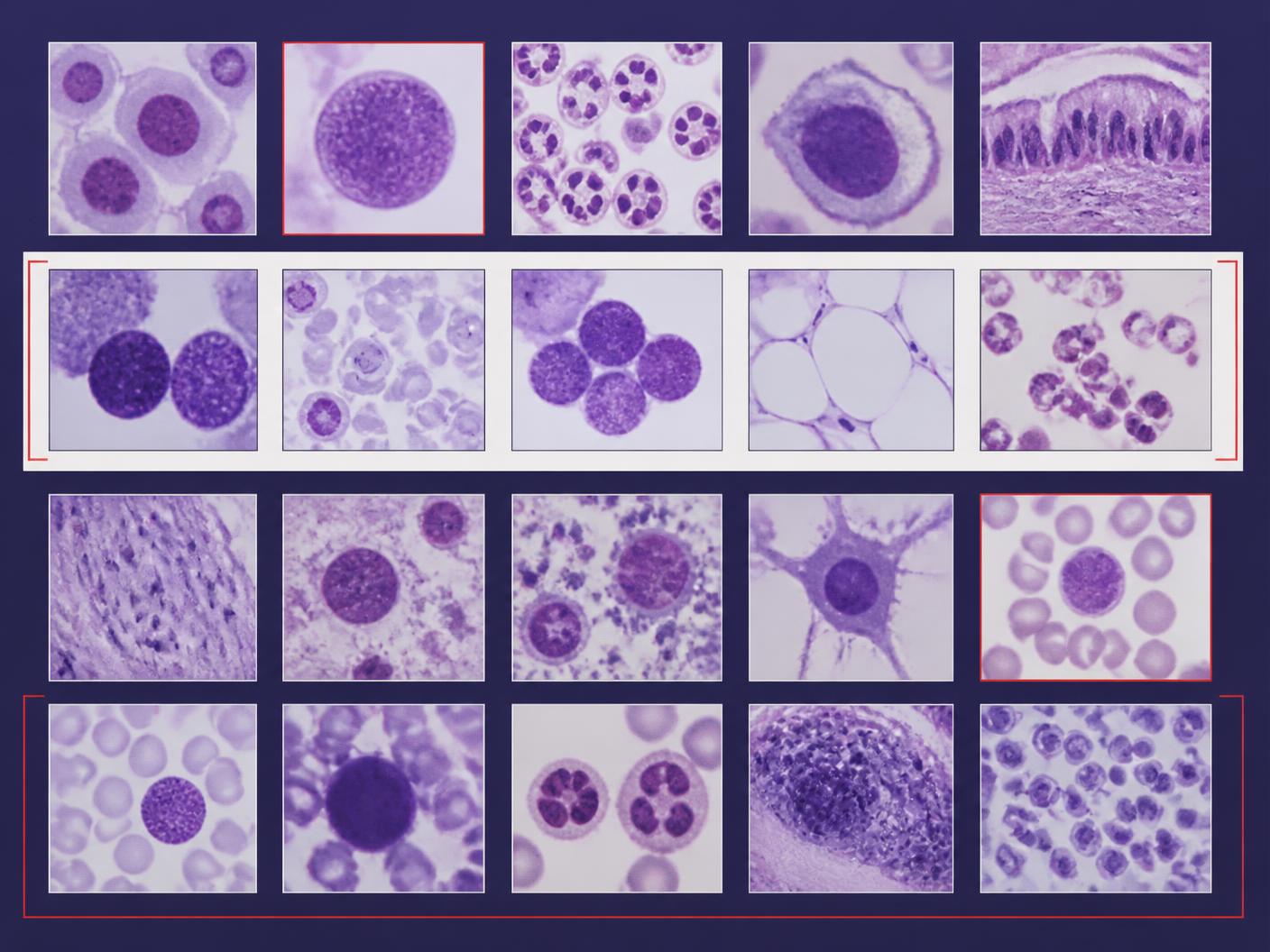
Abstract grid of varied violet microscopic cell crops on dark violet and off-white planes with thin red selection frames.
Illustrative tile mosaic. No class names, predictions or diagnostic markers are shown.

Batch transparency

Totals, failures and scenario versions in front — never a headline figure.

The batch view is built from deterministic local fixtures. Every number shown is illustrative demo data, not CellSight performance data, and each chart has an accessible table equivalent.

See the batch dashboard

Evidence Centre

What can be said today, and what is still missing.

A register that pairs each product claim with its dependency, an owner placeholder, a review-date placeholder and an explicit boundary.

Open the Evidence Centre
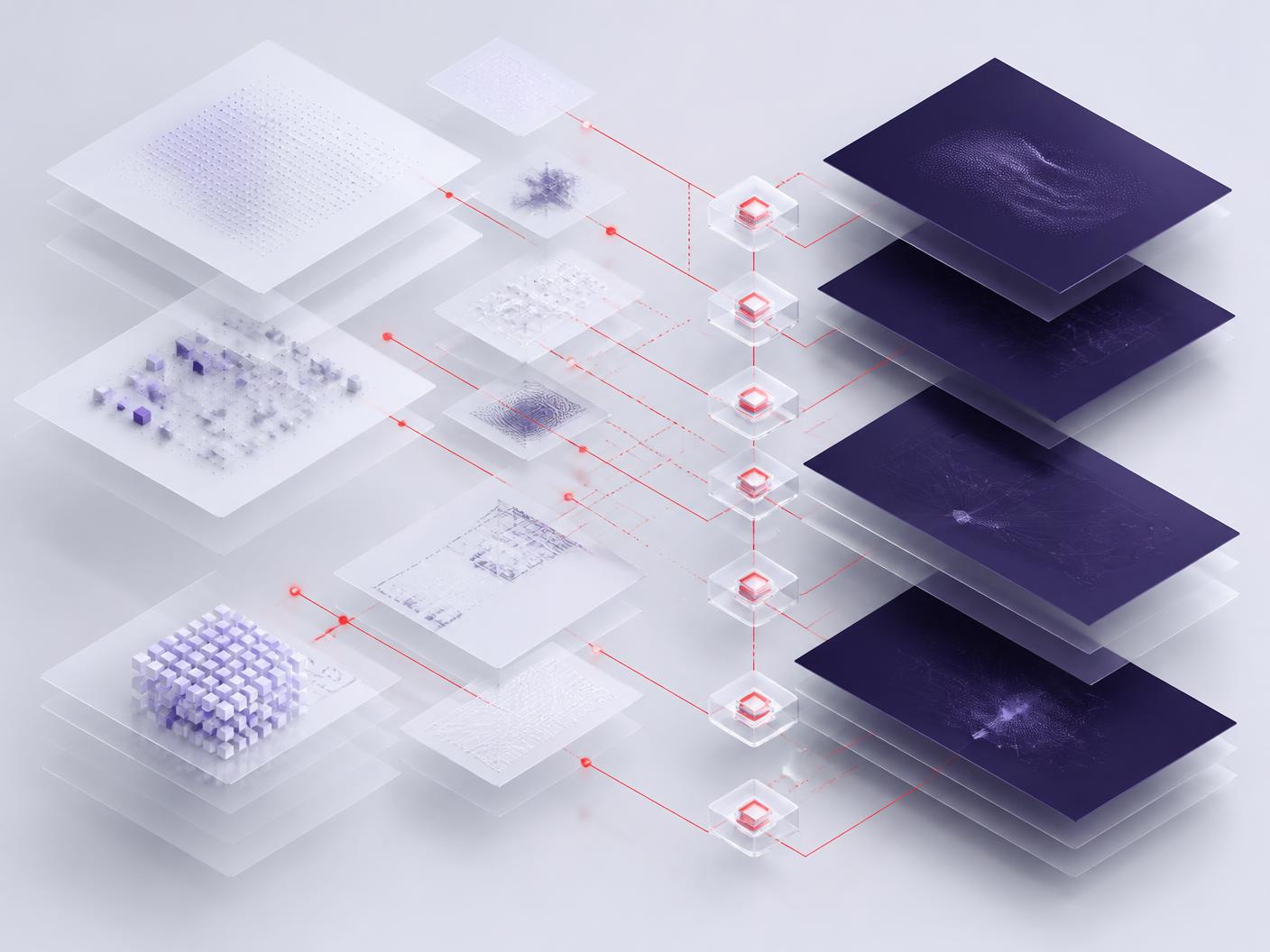
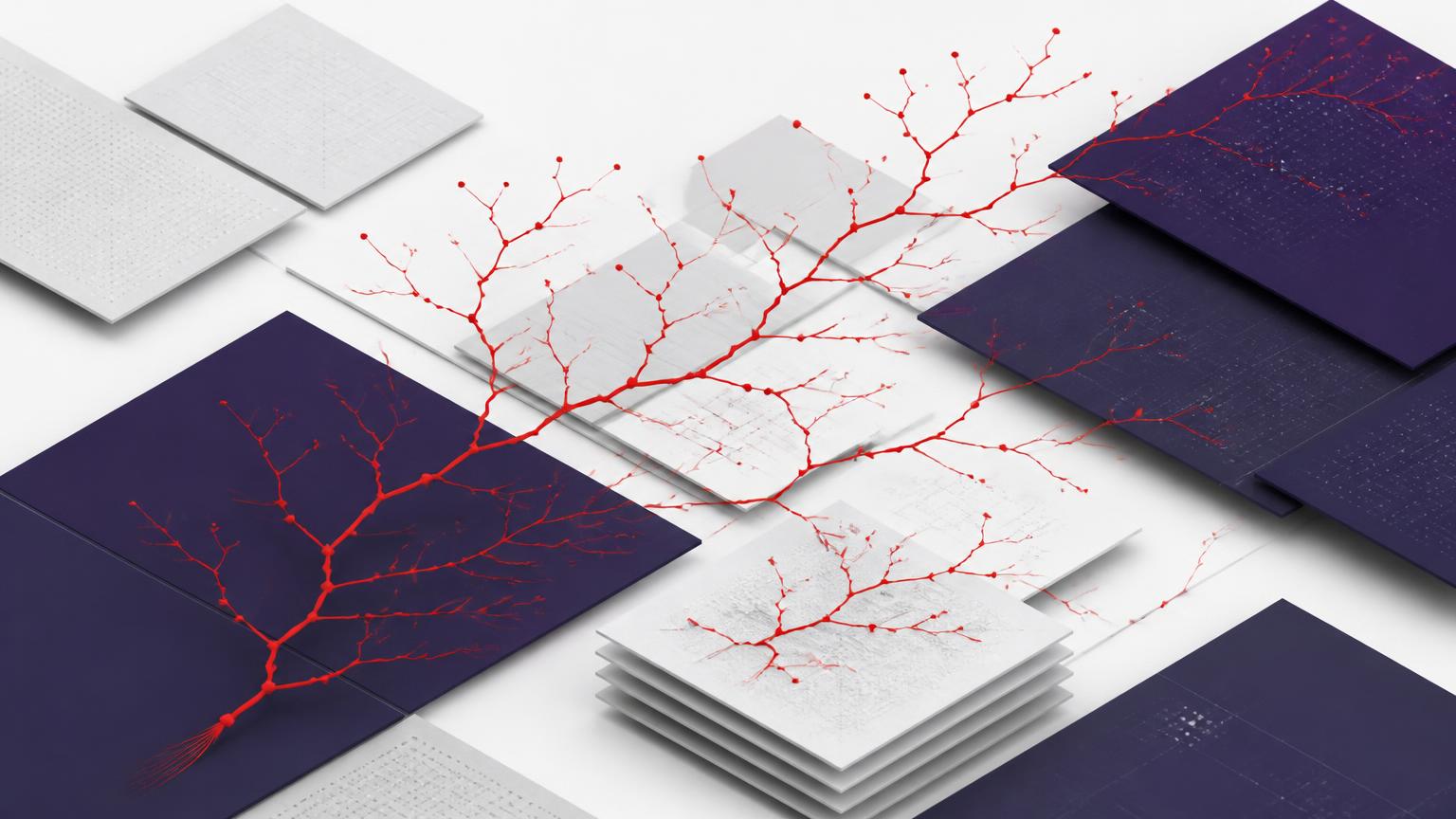
Abstract layered render of translucent document planes, dataset tiles and version nodes connected by fine red trace lines.
Illustration of a proposed lineage and evidence structure. No dataset, model card or trace exists in this build.

Evidence Assistant

A bounded assistant concept with a visible refusal path.

Answers come from a short list of locally stored, approved statements. No language model, retrieval index, external search or image input is connected.

View the assistant concept
Abstract render of translucent document pages flowing through a node constellation into a single highlighted answer surface, with red evidence paths.
Illustration of a document-to-answer concept. Scripted examples only.

Technology roadmap

Research candidates, sequenced honestly.

Every technology on the roadmap is marked “Research Candidate — not implemented or validated by CellSight.”

View the AI Roadmap
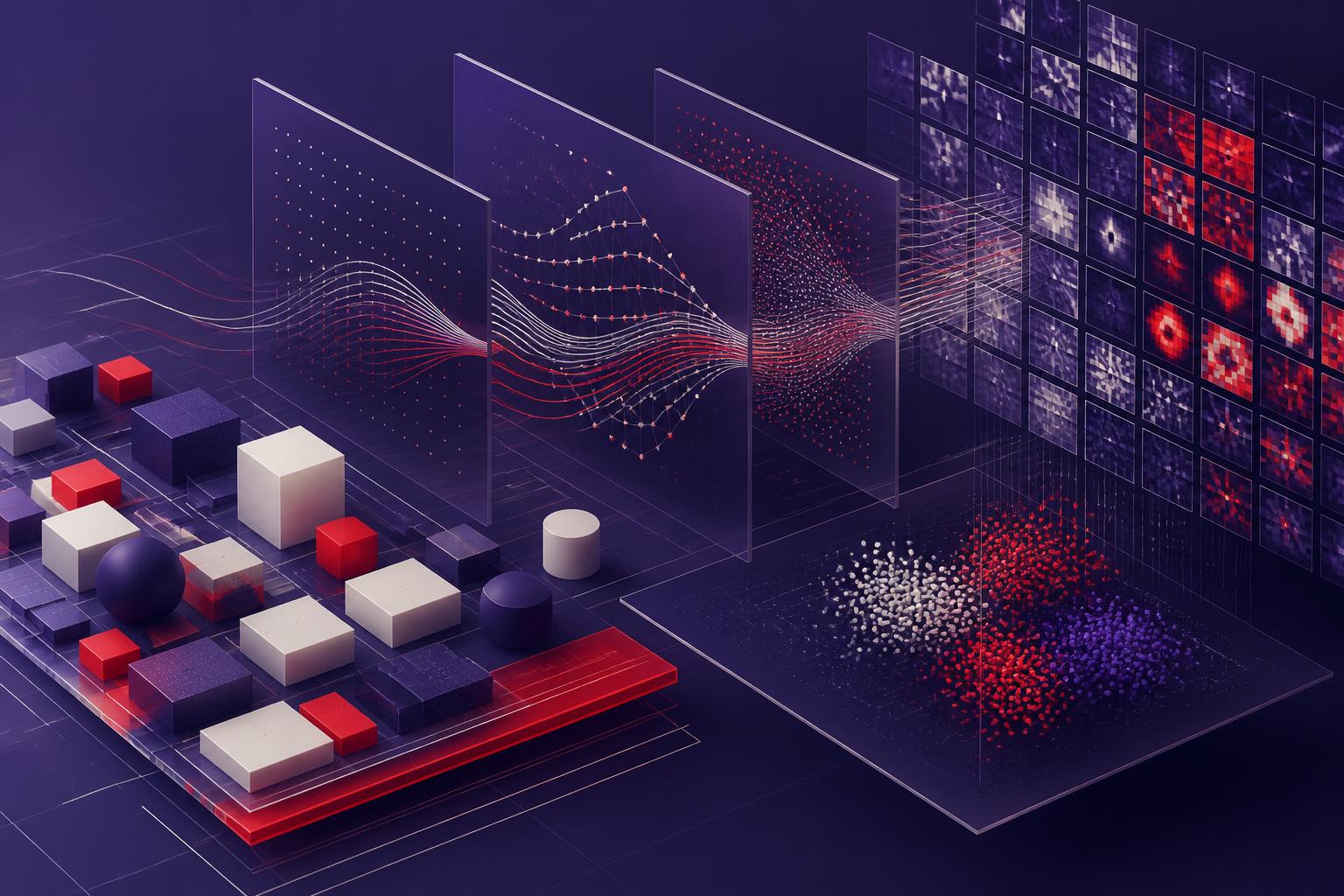
Abstract layered render of geometric foundation blocks, curve planes and feature-map grids in violet, red and off-white.
Abstract progression illustration. No dates, milestones or performance gains are represented.

Insights

Latest insights

Draft topics prepared for review.

Read Insights
Abstract composition of microscope optics, soft blood-cell texture and fine geometric construction lines in violet and red.

About CellSight

A product team building an evidence-first path for blood-cell image AI.

CellSight Diagnosis works on AI-powered microscopic blood-cell image analysis and the evidence structure required around it.

  • Capability states published alongside every proposed feature.
  • Evidence and dependencies kept visible rather than summarised away.
  • Research candidates named as candidates.
About CellSight

Request a conversation

Review the CellSight concept with us.

Send a note about the areas you would like to discuss — the product concept, the evidence structure, or the research roadmap.

Request a Conversation

Product-use boundary

The demonstrator must not be used for diagnosis, screening, triage, referral, prognosis, treatment recommendation, or clinical decision-making.